


FREE SHIPPING on multi-bottle orders & 100% money-back guarantee
ZAPPER Throat Spray

ZAPPER WHITE PAPER · NO. 01

Ingredient Science.

A review of the research on the six ingredients in ZAPPER Throat Spray.

Published
November 2026
Ingredients
06
Sources
9
Reading time
8 min

01Abstract

ZAPPER Throat Spray combines six ingredients: colloidal silver, osha root, echinacea root, licorice root, ginger root, and peppermint leaf oil. Each one has a long history in herbal and traditional wellness practice, and each has been the subject of scientific interest.

This paper brings that research together in one place. For every ingredient we describe what it is and summarize what published reviews and studies have looked at. We cite every source so you can read the original work yourself.

The studies cited here examine individual ingredients, mostly in laboratory settings. They are not studies of ZAPPER Throat Spray itself, and they do not show that ZAPPER treats, cures, or prevents any condition.


02 · THE FORMULA

The formula,
under the microscope.

Every bottle of ZAPPER starts with six ingredients and a precise formula. Tap an element to see what it is, where it comes from, and the part of the plant we use.

Ag is the chemical symbol for silver. Other codes abbreviate each botanical name.

A droplet falling into a clear glass dish of colloidal silver

LAB READOUT

Colloidal Silver

Source
Colloidal silver, 15 ppm
Part used
Mineral suspension
Sourcing
Carefully selected
In the formula
A time-honored mineral at the heart of the formula.

Colloidal silver is one of the six carefully selected ingredients in the original ZAPPER formula, included at 15 ppm.

  • 06Carefully selected ingredients
  • 15ppmColloidal silver
  • 30ml1 fl. oz. bottle
  • 100%Organic or sustainably harvested
  1. 01

    Select

    Six botanicals and minerals, each with a long tradition in herbal throat care.

  2. 02

    Source

    Certified organic or ethically wild-harvested, as listed on the label.

  3. 03

    Blend

    Brought together in one fresh, minty spray that fits in your pocket.

03Reading the evidence

Not all research carries the same weight. Each ingredient below is tagged with the kinds of evidence its sources represent.

  • Traditional use

    Documented use in herbal and folk traditions. Tells us how people have used a plant, not whether it works.

  • Lab studies

    Research on cells or compounds in a laboratory. Useful for understanding how an ingredient behaves, but not a test in people.

  • Clinical review

    A review that pools results from human trials. The strongest kind of evidence cited in this paper.

04Ingredient monographs

A droplet falling into a clear glass dish of colloidal silverAg

4.1

Colloidal Silver

Colloidal silver, 15 ppm · Mineral suspension

  • Traditional use
  • Lab studies

Background

Colloidal silver is a suspension of tiny silver particles in liquid. Silver has a long history in traditional remedies, and ZAPPER includes it at 15 ppm.

What the research explores

  • A widely cited review in Biotechnology Advances describes laboratory research on silver nanoparticles as antimicrobial agents, including how they interact with bacterial cells.1
  • This research is mostly laboratory work on silver particles and is not a study of throat sprays or of people.1
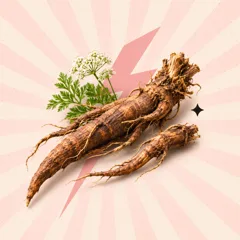
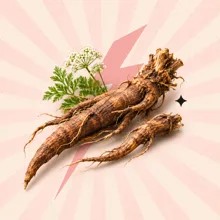
Whole osha roots with a sprig of white osha flowersLp

4.2

Osha Root

Ligusticum porteri · Root

  • Traditional use
  • Lab studies

Background

Osha (Ligusticum porteri) is a wild root of the Rocky Mountains with a long place in Native American and Hispanic folk herbalism.

Ethically wild harvested

What the research explores

  • A 1985 ethnopharmacology paper documents osha among the herbs used in Hispanic folk medicine in Colorado’s San Luis Valley and reviews its pharmacology.2
  • A 2016 laboratory study examined osha root extract on human blood cells (lymphocytes) and reported antioxidative and immune-modulatory activity in that setting.3
Echinacea root and coneflowerEa

4.3

Echinacea Root

Echinacea angustifolia · Root

  • Traditional use
  • Lab studies
  • Clinical review

Background

Echinacea, the purple coneflower, is native to North America and is among the most studied herbs in immune-support routines. ZAPPER uses Echinacea angustifolia root.

Certified organic · Ethically wild harvested

What the research explores

  • A Cochrane systematic review of 24 double-blind trials (4,631 participants) found results varied by product. The authors concluded a weak benefit from some echinacea products is possible, while benefits for treating colds were not shown overall.4
  • A 2012 review summarizes laboratory research on the antiviral and anti-inflammatory activity of Echinacea purpurea, a close relative.5
Licorice rootGg

4.4

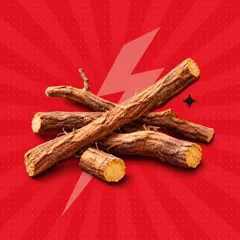
Licorice Root

Glycyrrhiza glabra · Root

  • Traditional use
  • Lab studies

Background

Licorice (Glycyrrhiza glabra) root has been used in herbal traditions across Europe and Asia for thousands of years and gives ZAPPER its naturally sweet note.

Certified organic

What the research explores

  • A 2018 review in Phytotherapy Research catalogs licorice’s compounds, including glycyrrhizin and flavonoids, and the pharmacological activities reported for them.6
  • A 2015 review summarizes laboratory findings on the antiviral and antimicrobial activities of licorice and its constituents.7
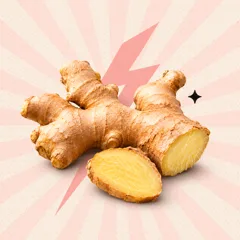
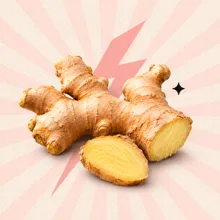
Ginger rootZo

4.5

Ginger Root

Zingiber officinale · Root

  • Traditional use
  • Lab studies
  • Clinical review

Background

Ginger (Zingiber officinale) is one of the world’s most familiar botanicals, used in cooking and traditional wellness practices for centuries.

Certified organic

What the research explores

  • A 2013 review in the International Journal of Preventive Medicine summarizes laboratory and human studies on the antioxidative and anti-inflammatory effects of ginger and its compounds, such as gingerols.8
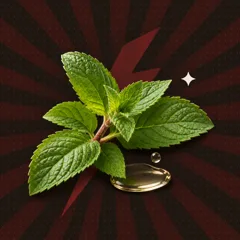
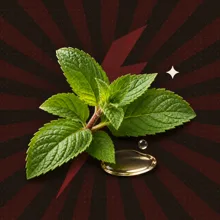
Peppermint leaves and peppermint oilMp

4.6

Peppermint Leaf Oil

Mentha × piperita · Leaf oil

  • Traditional use
  • Lab studies

Background

Peppermint (Mentha × piperita) oil is rich in menthol, the compound responsible for its familiar cooling sensation and ZAPPER’s fresh, minty finish.

What the research explores

  • A 2006 review in Phytotherapy Research describes peppermint’s volatile oils and polyphenols and summarizes laboratory findings on their antimicrobial, antiviral, and antioxidant activity.9

05References

  1. 1

    Rai M, Yadav A, Gade A. Silver nanoparticles as a new generation of antimicrobials. Biotechnology Advances. 2009;27(1):76–83.

  2. 2

    Appelt GD. Pharmacological aspects of selected herbs employed in Hispanic folk medicine in the San Luis Valley of Colorado, USA: I. Ligusticum porteri (osha) and Matricaria chamomilla (manzanilla). Journal of Ethnopharmacology. 1985;13(1):51–55.

  3. 3

    Nguyen K, Sparks J, Omoruyi FO. Investigation of the cytotoxicity, antioxidative and immune-modulatory effects of Ligusticum porteri (Osha) root extract on human peripheral blood lymphocytes. Journal of Integrative Medicine. 2016;14(6):465–472.

  4. 4

    Karsch-Völk M, Barrett B, Kiefer D, et al. Echinacea for preventing and treating the common cold. Cochrane Database of Systematic Reviews. 2014;(2):CD000530.

  5. 5

    Hudson JB. Applications of the phytomedicine Echinacea purpurea (Purple Coneflower) in infectious diseases. Journal of Biomedicine and Biotechnology. 2012;2012:769896.

  6. 6

    Pastorino G, Cornara L, Soares S, et al. Liquorice (Glycyrrhiza glabra): A phytochemical and pharmacological review. Phytotherapy Research. 2018;32(12):2323–2339.

  7. 7

    Wang L, Yang R, Yuan B, et al. The antiviral and antimicrobial activities of licorice, a widely-used Chinese herb. Acta Pharmaceutica Sinica B. 2015;5(4):310–315.

  8. 8

    Mashhadi NS, Ghiasvand R, Askari G, et al. Anti-oxidative and anti-inflammatory effects of ginger in health and physical activity: review of current evidence. International Journal of Preventive Medicine. 2013;4(Suppl 1):S36–S42.

  9. 9

    McKay DL, Blumberg JB. A review of the bioactivity and potential health benefits of peppermint tea (Mentha piperita L.). Phytotherapy Research. 2006;20(8):619–633.

This paper is provided for general educational purposes. These statements have not been evaluated by the Food and Drug Administration. This product is not intended to diagnose, treat, cure, or prevent any disease. Always follow the directions and precautions on the product label, and talk with a healthcare professional before use if you are pregnant, nursing, taking medication, have a medical condition, or are considering use for a child.

SIX INGREDIENTS. ONE SPRAY.

See the formula
in your pocket.

GET ZAPPER